Lost in the Stones of Rhodes: Where Every Step Feels Like a Story
Have you ever walked through a place that feels alive with memories? Rhodes, Greece isn’t just sun and sea—it’s layers of history whispering from ancient walls, Byzantine churches, and Ottoman streets. I wandered its alleyways not as a tourist, but as someone uncovering a living mosaic of cultures. This is exploration at its soulful best: raw, real, and deeply human. Rhodes offers more than picturesque coastlines; it invites travelers into a dialogue with time, where every stone tells a story and every corner reveals a new chapter of Mediterranean life shaped by centuries of convergence, resilience, and quiet beauty.
First Impressions: Stepping Into a World Beyond Time
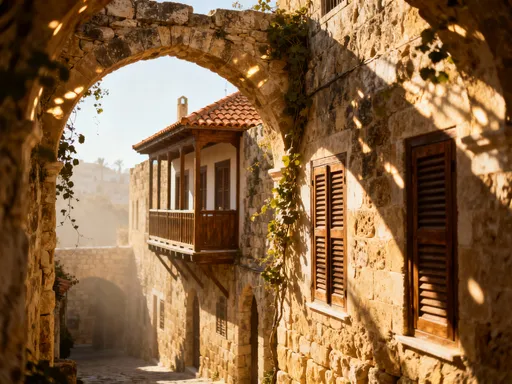
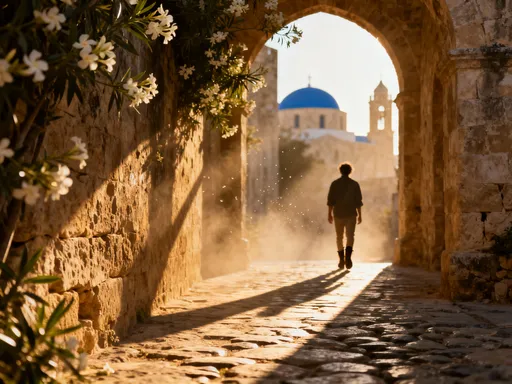
Arriving in Rhodes Town, the medieval Old Town rises like a mirage—a fortress of golden stone glowing under the Aegean sun. The contrast between the modern port, alive with ferries and cafes, and the hushed serenity within the ancient walls is striking. One moment you're surrounded by the hum of engines and chatter in multiple languages; the next, you step through the Gate of Eleftheria and enter a world shaped by centuries of empires, faiths, and seafarers. The shift is not just visual—it’s sensory. The scent of jasmine drifts from hidden gardens, the tap of footsteps echoes on worn cobblestones, and the shade of arched passageways offers relief from the bright island light.
Rhodes stands apart from other Greek islands not because it lacks beauty—its turquoise waters and pine-fringed coves are undeniable—but because it offers depth. While Santorini dazzles with cliffs and sunsets, and Mykonos pulses with energy, Rhodes speaks in quieter tones. It’s a destination for those who seek context, who want to understand how history lives in the present. The Old Town, a UNESCO World Heritage site, is Europe’s largest inhabited medieval city. It’s not a museum frozen in time but a living neighborhood where children play near ancient ramparts and shopkeepers open wooden shutters each morning as their families have for generations.
For the thoughtful traveler, this duality is the island’s greatest gift. You can begin your day with a swim in the calm waters near Elli Beach, then spend the afternoon tracing the footsteps of knights and sultans through narrow lanes that twist like secrets. The city’s layout itself tells a story—Latin and Turkish quarters still distinguishable by architecture and street names, churches that once served as mosques, fountains that once supplied water to soldiers. This is not a place where history is explained through plaques alone; it’s felt in the texture of the walls, heard in the bells that ring from bell towers with Ottoman tilework, and seen in the way locals navigate their days with pride in their layered heritage.
Choosing Rhodes means choosing immersion over escape. It means accepting that the island won’t always be easy to decipher—its layers resist quick understanding—but that effort is rewarded. The first glimpse of the Palace of the Grand Master looming above the rooftops, the sudden view of the harbor from a high terrace, the quiet moment in a courtyard where a cat naps in a patch of sunlight—all of these form a deeper kind of memory, one that stays long after the tan has faded.
The Heart of the Old Town: Knights, Crosses, and Hidden Courtyards
At the core of Rhodes Old Town lies the legacy of the Knights Hospitaller, a Christian military order that ruled the island from the 14th to the 16th century. Their presence shaped the city’s identity, leaving behind a fortified masterpiece that blends Gothic architecture with Mediterranean practicality. The Palace of the Grand Master, reconstructed in the 20th century but faithful to its medieval roots, stands as the most visible symbol of this era. Inside, mosaic floors, vaulted halls, and ancient artifacts speak of power, piety, and the constant threat of invasion. Yet the true magic of the Old Town isn’t in its grand monuments but in its quieter corners—the inner courtyards where washing flutters on lines, the small chapels tucked between homes, the shaded benches where elders sip coffee in the afternoon.
The Street of the Knights, once home to representatives of the eight langues, or divisions, of the Order, remains one of the best-preserved medieval streets in Europe. Lined with limestone facades and ornate coats of arms, it feels like a stage set—but one where life continues. Today, the buildings house museums, cultural spaces, and artisan shops. Visitors can see how the Knights lived, trained, and worshipped, but they can also buy handmade jewelry or sample local honey in the same arcades where armor was once stored. This seamless blend of past and present is what makes Rhodes so compelling—it doesn’t reenact history; it lives it.
Equally important are the Ottoman influences that followed the Knights’ departure. After the Ottoman conquest in 1522, Rhodes became part of a vast empire that stretched from North Africa to the Balkans. The Ottomans left their mark in the form of mosques—like the Suleymaniye Mosque, now a cultural venue—public baths, and the layout of the Muslim quarter. Street names still reflect this past, and the occasional call to prayer, though no longer heard, once echoed through these same lanes. The architecture reveals subtle fusions: arched windows with Islamic patterns, fountains with Arabic inscriptions, and houses built around central courtyards for privacy and cooling.
For travelers, the key to appreciating this complexity is timing and attention. Early morning or late afternoon visits allow for quieter exploration, when the day-trippers have left and the light slants golden across the stones. Walking slowly, looking up at carvings, pausing at open doorways, and listening—these are the acts that reveal the city’s soul. Photography is welcome, but so is stillness. A moment spent watching a local unlock a weathered door, or hearing laughter from a hidden garden, can be as revealing as any guidebook. The Old Town is not just to be seen; it’s to be felt, one step at a time.
Beyond the Walls: The Island’s Cultural Layers Unfold
While the Old Town is Rhodes’ crown jewel, the island’s cultural richness extends far beyond its ramparts. A short drive or bus ride brings you to Lindos, a whitewashed village perched dramatically above a crescent bay. Its acropolis, crowned by the Temple of Athena Lindia, dates back to the 4th century BCE and offers one of the most breathtaking views in the Aegean. Yet Lindos is not just a postcard—it’s a living community where tradition is woven into daily life. The climb to the acropolis, on donkey-worn steps or by foot, takes you through narrow alleys lined with bougainvillea and family-run shops selling hand-painted ceramics and linen garments.
What makes Lindos special is its balance between tourism and authenticity. While it draws crowds, especially in summer, the village retains its rhythm. Locals gather in the plateia, the central square, in the evenings. Children play near the ancient theater, and elders sit outside the kafenio, playing backgammon under the plane trees. Religious festivals, particularly around Easter and the Assumption of the Virgin in August, bring the community together in processions that blend solemnity and celebration. Visitors are often welcomed as observers, if not participants, as long as they show respect—covering shoulders when entering the small churches, speaking softly, and appreciating rather than intruding.
Other villages, like Monolithos and Lardos, offer quieter glimpses into island life. Monolithos, built around a crusader castle, is known for its olive groves and stone houses with red-tiled roofs. Lardos blends ancient ruins with modern family homes, and its beach is popular without being overcrowded. These places remind us that Rhodes is not just a historical site but a living island, where agriculture, fishing, and craftsmanship continue alongside tourism. The presence of Byzantine chapels on remote hilltops, the scent of thyme in the hills, the sound of goats on rocky slopes—all speak of a landscape shaped by time and care.
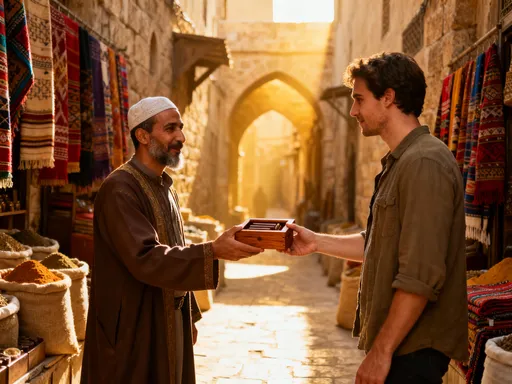
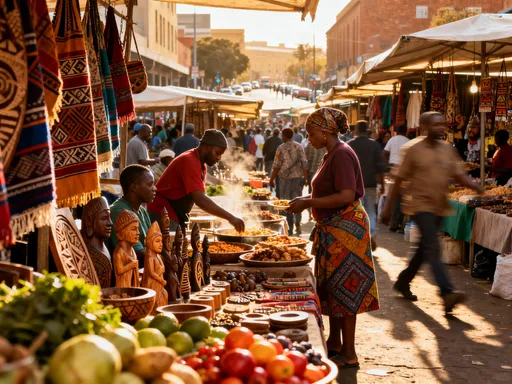
To truly engage with this culture, travelers are encouraged to move beyond sightseeing. A visit to a local market, whether in Rhodes Town or a village square, offers insight into daily rhythms. Stalls overflow with figs, capers, local cheese, and herbs gathered from the hills. Conversations in Greek flow around you, and shopkeepers may offer a taste of something sweet or a piece of advice about the best path to the beach. These small exchanges are the heart of cultural connection—they don’t require fluency, only openness. And in return, they offer something rare: a sense of belonging, even if only for a moment.
Flavors That Tell a Story: A Taste of Crossroads Cuisine
Food in Rhodes is a direct reflection of its history—a cuisine shaped by centuries of exchange between Greek, Ottoman, and Italian influences. Unlike the standardized menus found in tourist-heavy areas, traditional Rhodian dishes tell stories of adaptation, celebration, and home. One such dish is makarounes, a hand-rolled pasta similar to gnocchi, served with a rich tomato sauce and sometimes topped with staka, a creamy dairy product unique to the island. It’s a humble dish, born in village kitchens, yet deeply satisfying—a taste of comfort passed from grandmother to granddaughter.
Sweet treats, too, carry meaning. Melekouni, a bar made from sesame, honey, and nuts, dates back to ancient times and was once offered as a sacred offering. Today, it’s a beloved snack, often shared during holidays or given as a gift. Other specialties include mpoumpouna, a soft, cake-like cookie flavored with orange or rose water, and loukoumia, the Greek version of Turkish delight, often dusted with powdered sugar and available in flavors like mastic or bergamot. These sweets are more than desserts; they are edible heirlooms, connecting present-day Rhodes to its layered past.
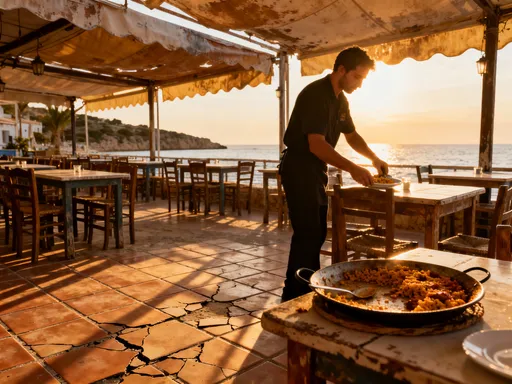
The best way to experience this cuisine is through family-run tavernas, often tucked away in backstreets or nestled in village squares. These are not polished establishments but warm, unpretentious spaces where the menu changes with the season and the catch of the day. A typical meal begins with meze—small plates of tzatziki, dolmades, fried zucchini, or marinated octopus—followed by grilled fish, lamb cooked with lemon and herbs, or stuffed vegetables. Meals unfold slowly, often accompanied by local wine or raki, the strong spirit sipped after dinner.
Equally important is the role of the kafenio, the traditional coffee house. Here, men—though women are increasingly welcome—gather in the mornings and afternoons to drink Greek coffee, play cards, and discuss everything from weather to family news. The ritual is simple: a small cup of thick, dark coffee served with a glass of water. There’s no rush, no Wi-Fi, no loud music—just conversation and presence. For visitors, sitting in a kafenio, even quietly, is a form of cultural listening. It’s a reminder that connection doesn’t always require words; sometimes, it’s found in shared silence, in the clink of cups, in the rhythm of a place that values time.
Living Culture: Festivals, Music, and the Rhythm of Island Life
While monuments and food offer insight into Rhodes’ heritage, its intangible culture—music, dance, and celebration—reveals its soul. The island’s calendar is marked by religious and seasonal festivals known as panigiria, village gatherings that blend worship, music, and community. Held in honor of patron saints, these events often begin with a church service, followed by hours of dancing, singing, and feasting under the stars. The sound of the lyra, a three-stringed Cretan instrument, carries through the night, its haunting melodies echoing across hills and valleys.
These festivals are not performances for tourists; they are heartfelt expressions of identity. Yet visitors are often welcomed with warmth, as long as they observe basic etiquette—dressing modestly, refraining from intrusive photography, and showing genuine interest. In some villages, guests may even be invited to join the syrtos, the traditional circle dance, where hands are linked and steps follow a simple, repeating pattern. There’s no pressure to be perfect; the joy is in participation, in becoming part of the rhythm, even briefly.
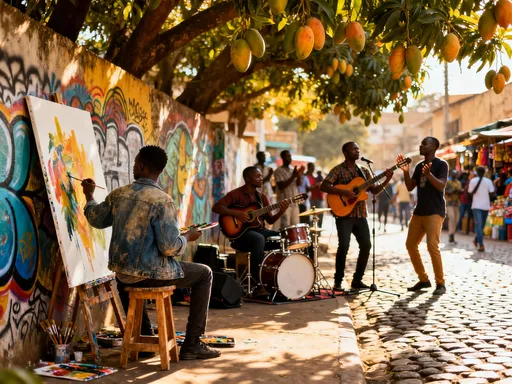
Music in Rhodes is not confined to festivals. In small chapels, Byzantine chants still echo during services, their melodic lines rising like incense. In homes, older generations teach children folk songs passed down through decades. On summer evenings, impromptu concerts may break out in village squares, where musicians gather with guitars, violins, and percussion. These moments are unplanned, unrecorded, and all the more precious for it. They represent a culture that values presence over performance, community over spectacle.
For travelers, the lesson is clear: the deepest experiences often come not from schedules, but from serendipity. A chance invitation, a shared drink, a moment of eye contact that turns into conversation—these are the threads that weave a meaningful journey. Rhodes doesn’t demand participation, but it rewards openness. And in a world where so much travel feels transactional, these human connections are a rare and lasting gift.
Getting Off the Beaten Path: Finding Quiet Corners of Tradition
While Rhodes welcomes many visitors, its quieter villages offer a different pace—one that rewards slow, mindful travel. Places like Archangelos, in the island’s south, and Emponas, nestled in the mountainous interior, preserve older ways of life. Archangelos, known for its pottery and winemaking, hosts a weekly market where farmers sell fresh produce, handmade cheese, and local wine. Emponas, surrounded by vineyards and fig trees, is home to one of the island’s oldest wineries, where families still press grapes using traditional methods.
Reaching these villages is part of the experience. Renting a scooter or small car allows flexibility, but patience is essential—roads can be narrow, and signage minimal. The journey itself becomes part of the discovery: passing through olive groves, stopping at roadside stands for fresh juice, waving to shepherds with their flocks. In these places, time moves differently. Shops may close in the afternoon. Meals take hours. Conversations meander. This is not inefficiency; it’s a different philosophy of life, one that values rest, relationship, and rhythm over speed.
Travelers are encouraged to engage respectfully. A simple greeting in Greek—Yassas—opens doors. Asking permission before photographing people or homes shows consideration. Buying directly from artisans, farmers, or family-run inns supports the local economy and fosters connection. In Emponas, a visit to a family vineyard might include a tour, a tasting, and an invitation to stay for dinner. These moments are not for sale; they are offered in the spirit of philoxenia, the Greek concept of hospitality that sees the guest as a gift.
Responsible travel in Rhodes also means environmental awareness. The island’s beauty depends on its fragile ecosystems—coastal dunes, pine forests, and marine life. Staying on marked trails, avoiding single-use plastics, and supporting eco-conscious businesses help preserve this heritage. Tourism brings opportunity, but it also brings responsibility. The goal is not to leave no trace, but to leave a positive one—to be a visitor who gives back, even in small ways.
Why Rhodes Stays With You: The Quiet Power of Cultural Immersion
Rhodes changes the way you see travel. It doesn’t offer instant gratification or curated experiences designed for social media. Instead, it asks for patience, curiosity, and presence. It rewards those who wander without a strict itinerary, who listen more than they speak, who are willing to stand quietly in a courtyard and let the past speak. The island becomes more than a destination; it becomes a teacher.
What stays with you is not the list of sites visited, but the feeling of connection. It’s the shopkeeper who offered you a piece of melekouni and asked about your family. It’s the old man in the kafenio who nodded as you passed, as if acknowledging your presence in his world. It’s the moment you stood on the acropolis at sunset and felt the weight of centuries, not as a burden, but as a gift. These are the memories that endure—not because they are dramatic, but because they are real.
Rhodes reminds us that culture is not something to be consumed, but to be experienced with humility. It’s in the way a meal unfolds over hours, in the sound of a language you don’t understand but feel, in the way history lives not in books, but in the stones beneath your feet. To travel here is to practice mindfulness, to slow down, to notice. And when you return home, you don’t just bring souvenirs; you bring stories—of people, of places, of moments that changed the way you see the world.
So let Rhodes be more than a stop on a map. Let it be an invitation—to listen, to learn, to remember that every step can be a story. In a world that often feels rushed and shallow, the island offers depth, quiet, and the enduring power of human connection. And perhaps, in the end, that is the greatest journey of all.