You Won’t Believe These Dining Traps in the Balearic Islands
Eating in the Balearic Islands should be a dream—fresh seafood, local olive oil, sun-kissed tomatoes. But I learned the hard way that tourist crowds and flashy menus can hide disappointing meals. I’ve sat through overpriced paella, flavorless “authentic” tapas, and restaurants that look amazing online but miss the soul of Spanish cuisine. It’s not about avoiding restaurants—it’s about knowing what to watch for. The islands offer some of the Mediterranean’s most vibrant culinary traditions, yet too many visitors leave remembering the price, not the taste. With a few insights, you can bypass the traps and discover meals that reflect the true rhythm, seasonality, and warmth of Balearic life.
The Allure of Balearic Dining – And Why It Can Go Wrong
The Balearic Islands have long been celebrated for their sun-drenched landscapes, turquoise waters, and relaxed Mediterranean pace. Yet beyond the beaches and boutique hotels lies a culinary culture deeply rooted in centuries of tradition. From the rustic stews of Mallorca’s inland villages to the grilled fish served at Formentera’s barefoot beach shacks, the food here tells a story of land, sea, and community. Locals take pride in dishes passed down through generations—think tumbet, a vegetable medley similar to ratatouille, or sobrassada, the soft, spiced sausage that perfumes every market stall. Olive oil, harvested from ancient groves, glistens in nearly every preparation, and fresh herbs grow in window boxes and terraced gardens.
Yet for many travelers, the reality of dining in the Balearics falls short of the promise. The gap between expectation and experience often stems not from a lack of good food, but from the overwhelming influence of tourism. In peak season, certain areas transform into culinary theme parks, where authenticity is sacrificed for speed, volume, and visual appeal. Restaurants in high-traffic zones cater to international tastes, diluting traditional flavors to suit unfamiliar palates. Portions may be large, but the ingredients are often imported, the cooking methods rushed, and the final dish assembled from pre-made components. The problem isn’t that good food is hard to find—it’s that the most visible options are often the least representative.
This disconnect is fueled by digital exposure. A restaurant with a prime location and an Instagrammable terrace can thrive on aesthetics alone, even if the kitchen lacks passion or precision. Meanwhile, family-run eateries tucked down quiet lanes, where meals are still made from scratch, remain under the radar. The result is a paradox: the more a place looks like a postcard, the less likely it is to deliver an authentic taste of the islands. Understanding this dynamic is the first step toward eating like a local, not a tourist.
Tourist Zones: Where Flavor Takes a Back Seat
In popular destinations such as Palma’s marina, Ibiza Town’s Dalt Vila, or the bustling resorts of Calvià and Sant Antoni, dining often feels more like a transaction than an experience. These areas are designed for convenience, offering quick service and familiar menu items to accommodate short stays and diverse diets. While this can be helpful for families or first-time visitors, it comes at a cost: culinary compromise. Many restaurants in these zones operate on high turnover, serving hundreds of meals a day during summer. To keep up, kitchens rely on frozen ingredients, pre-packaged sauces, and reheated dishes. A seafood platter may include imported shrimp or farmed fish, and a “mixed grill” could be a combination of processed meats with little connection to local farming practices.
One of the most telling signs of a tourist-targeted restaurant is the multilingual menu. While it’s practical to see options in English, German, or French, an overabundance of languages often signals a lack of local patronage. These menus are frequently laminated, filled with glossy photos, and offer a wide array of international dishes—from burgers to sushi—alongside watered-down versions of Spanish classics. A paella listed as “seafood delight” with squid ink and scallops is not a traditional preparation; it’s a marketing ploy designed to catch the eye of passersby. Similarly, a tapas menu that includes nachos or spring rolls is not honoring regional cuisine.
Location is another red flag. Restaurants situated directly on main squares, harborfronts, or near major attractions often pay premium rents, and those costs are passed on to diners. A table with a view may seem worth the extra expense, but the food rarely justifies the price. Instead of sourcing fresh, local ingredients daily, these establishments prioritize consistency and speed. The result is a meal that tastes generic, regardless of where you are in the world. To eat well in the Balearics, it often means stepping away from the view and venturing just a few blocks off the beaten path, where menus are simpler, prices are fairer, and the clientele includes more residents than visitors.
The Paella Paradox: When the Iconic Dish Misses the Mark
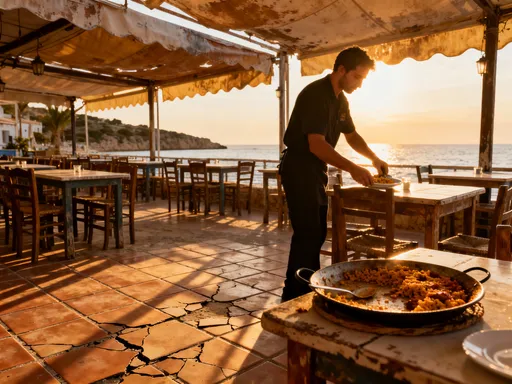
No dish is more associated with Spain than paella, and few are more frequently misrepresented. In the Balearic Islands, ordering paella can be a gamble. While the dish is celebrated across the country, its true home is Valencia, over 200 kilometers away from Mallorca. The authentic version requires short-grain rice, saffron, fresh vegetables, and proteins like rabbit, chicken, or seafood, cooked slowly over an open flame in a wide, shallow pan. It is not meant to be reheated or made in advance. Yet in many tourist restaurants across the islands, paella is treated as a convenience item—prepared in bulk, stored in refrigerators, and warmed up upon order.
A major clue to inauthentic paella is the wait time. If a restaurant promises to serve it in under 30 minutes, it is almost certainly not cooked fresh. Traditional paella takes at least 45 minutes to prepare, and reputable places will not rush the process. Another warning sign is the presentation: if the dish arrives in a deep casserole or lacks the characteristic socarrat—the caramelized crust that forms on the bottom of the pan—it’s likely not the real thing. Some restaurants even serve “paella” for one, which contradicts the communal spirit of the dish, traditionally shared among at least two or more people.
Seasonality also plays a role. In winter months, when fresh seafood and garden produce are less abundant, the quality of paella naturally declines. Yet many restaurants continue to offer it year-round, relying on frozen ingredients that compromise flavor and texture. A better approach is to follow local habits: in the Balearics, arroz a banda or fideuà—similar rice and noodle dishes with strong regional roots—are often more authentic choices. By shifting expectations and embracing what the islands truly specialize in, diners can avoid the paella trap and discover more genuine expressions of Mediterranean cooking.
Menu Tricks: Decoding Tourist-Focused Pricing and Language
Beyond the food itself, the menu is often where deception begins. In high-traffic areas, many restaurants use psychological tactics to make prices appear more attractive than they are. One common strategy is the “menú del día”—a fixed-price lunch menu that seems like a bargain at first glance. While this concept is genuine and widely used in Spain, its tourist versions often cut corners. The included dishes may be basic or reheated, the wine low quality, and the service hurried to turn tables quickly. Some establishments list the price prominently but fail to mention that beverages or service charge are not included, leading to an unexpectedly high final bill.
Another red flag is the overuse of English on menus, especially when paired with exaggerated descriptions. Phrases like “world-famous paella” or “best tapas on the island” are rarely accurate and often indicate a lack of confidence in the food itself. Similarly, menus with full-color photos of every dish suggest that appearance matters more than taste. In authentic local restaurants, menus are typically simple, printed in Catalan or Spanish, and change daily based on what’s fresh at the market. Handwritten specials are a strong indicator of a kitchen that cooks with intention.
Wine pricing is another area of concern. Some restaurants apply markups of 300 percent or more on imported bottles, knowing that tourists are less likely to notice. A better strategy is to order local wines, which are not only more affordable but also reflect the terroir of the islands. Mallorca produces excellent reds from the Callet grape, and Menorca has a growing reputation for crisp, mineral whites. By asking for the house wine or selecting from the regional list, diners support local producers and enjoy a more authentic pairing. Ultimately, transparency is key: if a menu feels confusing, overly flashy, or too good to be true, it probably is.
Off-the-Beaten-Path Eats: Finding Real Flavor Beyond the Guidebooks
Some of the most memorable meals in the Balearic Islands happen far from review sites and travel blogs. In quiet villages like Deià, Fornalutx, or Es Mercadal, family-run taverns serve food that has changed little over generations. These places rarely advertise, have minimal online presence, and may not even accept credit cards. But they offer something priceless: a connection to place and tradition. A simple plate of grilled sardines, drizzled with local olive oil and served with rustic bread, can be more satisfying than any multi-course tasting menu in a luxury resort.
One of the best ways to discover these hidden gems is to visit local markets. The Mercat d’Olivar in Palma is a treasure trove of fresh produce, cheeses, and cured meats. By shopping here, you not only support small producers but also gain insight into what’s in season. Many vendors are happy to recommend nearby eateries or even share family recipes. In Mahón, the capital of Menorca, the Mercat de Pesca offers a daily display of the island’s freshest catch. Arriving early allows you to see fishermen unload their haul and choose the seafood that will later appear on your plate.
Another effective strategy is to follow the locals. Observe where bus drivers, shopkeepers, or delivery workers eat during their breaks. These individuals know which spots offer good value and fresh food. In smaller towns, a crowded lunchtime restaurant with a simple menu and no signage is often a sign of authenticity. Similarly, fincas—traditional rural estates—sometimes open their kitchens to visitors, serving home-cooked meals made from ingredients grown on-site. These experiences are not about luxury or presentation; they are about warmth, generosity, and the simple joy of sharing a meal.
Timing Matters: When to Eat Like a Local
In Spain, meal times are not just habits—they are cultural rhythms. Tourists who arrive for dinner at 7 or 8 PM may find restaurants half-empty, kitchens unprepared, and menus limited. The true dining experience begins much later. In the Balearics, locals typically have lunch between 2:00 and 4:00 PM and dinner after 9:30 PM, often closer to 10:00 or even 10:30 in summer. By aligning with these hours, visitors gain access to freshly prepared dishes, a livelier atmosphere, and a more authentic social experience.
The late schedule allows kitchens to work with the day’s freshest ingredients. Fish markets close in the morning, and produce is delivered in the afternoon. Restaurants that prioritize quality wait until evening to prepare key dishes, ensuring peak flavor and texture. Ordering paella or grilled fish at 8 PM may mean it’s made from ingredients that have been sitting for hours. But by dining later, you join the rhythm of the community and benefit from food cooked at its best moment.
Tapas culture also follows this timing. In the early evening, around 8:00 PM, locals begin gathering at bars for small plates and drinks. This is an ideal time to sample a variety of flavors without committing to a full meal. Places like Palma’s Santa Catalina neighborhood come alive with energy, as friends share plates of montaditos, olives, and local cheeses. By embracing the local schedule, travelers move beyond the role of observer and become part of the daily life of the islands.
How to Choose Wisely: A Practical Guide to Authentic Dining
Avoiding dining traps in the Balearic Islands doesn’t require expert knowledge—just awareness and intention. Start by using online reviews with caution. While platforms like TripAdvisor or Google can offer useful insights, they are often skewed by photo-heavy posts and one-time visitors who may not understand local cuisine. A restaurant with dozens of perfect-looking food photos is not necessarily the best choice. Instead, look for consistent praise of flavor, service, and authenticity, especially from reviewers who mention returning multiple times.
Pay attention to the language of the menu. Establishments that list their offerings in Catalan or Spanish, with minimal translation, are more likely to cater to locals. Menus that feature regional names—like “tumbet,” “ensaimada,” or “caldereta de llagosta”—suggest a commitment to tradition. Avoid restaurants where staff stand outside trying to lure passersby with aggressive invitations. These tactics are rarely used by well-established, locally respected places.
Look for simplicity. The best meals often come from restaurants with a short menu, focusing on a few well-executed dishes. A kitchen that changes its offerings daily based on market availability is one that values freshness and seasonality. Reservations can also be a good sign—popular local spots often require booking in advance, especially on weekends. If a place is fully booked, it’s usually because residents know it’s worth the effort.
Finally, remember that authenticity is not about luxury. It’s about respect—for ingredients, for tradition, and for the people who grow, catch, and cook them. A plastic table under a vine-covered pergola can serve a more meaningful meal than a five-star dining room with a sea view. By slowing down, asking questions, and embracing the local way of eating, visitors can transform their dining experience from a routine necessity into a highlight of their trip. The Balearic Islands offer more than beautiful scenery; they offer a chance to taste the Mediterranean as it was meant to be—simple, vibrant, and deeply satisfying.