You Won’t Believe What I Found in Kuching
Walking through Kuching feels like flipping through a living history book written in brick, steel, and vibrant paint. I didn’t expect much—just a quiet stop in Malaysian Borneo—but the city’s architecture completely blew me away. Colonial shophouses stand shoulder-to-shoulder with futuristic civic buildings, while traditional Malay woodwork blends seamlessly with Chinese motifs and indigenous Iban patterns. This is a city where every corner tells a story, and the skyline? Absolutely chef’s kiss. What began as a brief layover turned into a deep dive into one of Southeast Asia’s most underrated urban tapestries—a place where heritage isn’t preserved behind glass but lives in the rhythm of daily life, in the curve of a carved eave, and in the quiet pride of its people.
First Impressions: Arriving in Kuching
Touching down at Kuching International Airport, the first thing that strikes you is the calm. There’s no rush, no blaring horns—just the soft hum of a city that moves at its own pace. The drive into the city center follows the winding Sarawak River, a ribbon of dark water reflecting the lush green hills beyond. From the road, glimpses of rooftops emerge—some red-tiled and colonial, others sleek and modern—hinting at the layered identity of the capital of Sarawak. Many travelers pass through expecting little more than a gateway to Borneo’s rainforests and orangutans, but Kuching quietly insists on being seen on its own terms.
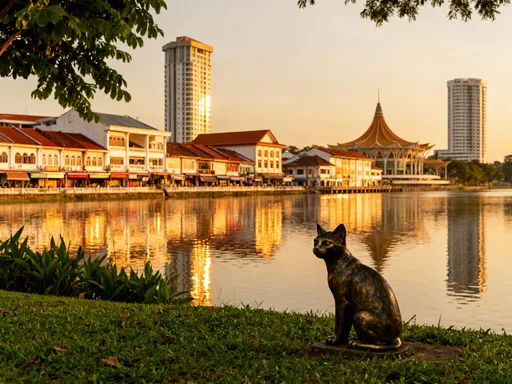
The riverfront, known locally as The Waterfront, serves as the city’s beating heart. Lined with walking paths, open-air cafes, and preserved heritage buildings, it offers a seamless blend of leisure and history. As evening falls, golden lights trace the outlines of 19th-century facades, while families gather on benches to enjoy the cool river breeze. The contrast between expectation and reality couldn’t be starker. This isn’t just a sleepy river town; it’s a cultural crossroads where centuries of migration, trade, and tradition have shaped an architectural landscape unlike any other in Malaysia. The city doesn’t shout its significance—it whispers it, in the creak of wooden floorboards and the echo of footsteps on cobblestone paths.
What makes Kuching’s arrival experience so memorable is its authenticity. Unlike heavily touristed destinations where history feels staged, here, daily life unfolds alongside heritage. Fishermen mend nets beneath colonial arcades, and street vendors set up stalls in the shadows of restored administrative buildings. The city doesn’t segregate the old from the new; it weaves them together, inviting visitors not just to observe, but to participate in its ongoing story.
Colonial Echoes: The Old Courthouse & Waterfront Shophouses
Standing proudly along the northern bank of the Sarawak River, the Old Courthouse is one of Kuching’s most iconic landmarks. Built during the Brooke dynasty—the era of the White Rajahs in the late 19th century—its grand clock tower and symmetrical wings reflect British colonial design adapted to the tropical climate. Arched windows allow for cross-ventilation, high ceilings keep interiors cool, and wide verandahs shield walls from relentless sun and rain. Once the seat of law and governance, the building has been meticulously restored and now houses cultural exhibits, a tourist information center, and a riverside cafe where visitors sip kopi tarik while gazing at passing longboats.
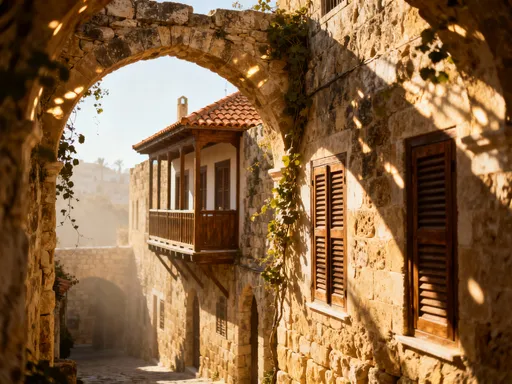
Flanking the Old Courthouse are rows of restored shophouses, their pastel-colored facades glowing in the morning light. These two- and three-story buildings, built between the 1860s and early 1900s, were originally homes and businesses for Chinese merchants who settled in Kuching during the spice and rubber trade booms. Their design—a fusion of Southern Chinese and European influences—features ornate iron grilles, tiled roofs, and open-air corridors known as five-foot ways, a term coined by Sir Stamford Raffles in Singapore. These covered walkways, mandated in colonial urban planning, remain functional today, offering shelter from sun and rain for pedestrians.
What’s remarkable is how these buildings have evolved. Once centers of commerce and residence, they now host art galleries, boutique hotels, heritage museums, and cozy cafes serving kaya toast and teh tarik. The transformation is a testament to thoughtful urban renewal—preserving historical integrity while meeting modern needs. Walking through this district feels like stepping into a living museum, where history isn’t frozen but allowed to breathe, adapt, and remain relevant.
Cultural Fusion in Brick and Wood
Kuching’s architectural richness lies not in a single style, but in its harmonious blending of Malay, Chinese, and indigenous Dayak traditions. This multicultural imprint is visible in everything from religious buildings to private homes. The Tua Pek Kong Temple, the city’s oldest Chinese temple, dates back to the 19th century and sits at the foot of Mount Serapi. Its curved roofs, adorned with ceramic dragons and phoenixes, rise above bustling market stalls, while incense coils drift through the air like silent prayers. Inside, altars glow with candles and offerings, a space where spiritual devotion and community life intersect.
Just a short walk away, the Masjid Jamek, a historic mosque near the river confluence, showcases a different aesthetic. Built in the early 20th century, its design blends Mughal influences with local materials and craftsmanship. The whitewashed domes and slender minarets contrast beautifully with the surrounding greenery, while interior walls feature floral motifs hand-painted by local artisans. Unlike grand mosques in larger cities, this one maintains an intimate scale, welcoming both worshippers and respectful visitors.
Equally compelling are the traditional Malay and Iban houses, some preserved in heritage villages like Kampung Boyan and the Sarawak Cultural Village. Elevated on wooden stilts to protect against flooding and wildlife, these homes feature steeply pitched roofs made of attap (palm thatch) and intricate carvings depicting ancestral stories and nature spirits. The Iban longhouses, once scattered across the interior, are now represented in reconstructed forms, offering insight into communal living and craftsmanship. The use of natural materials—ironwood, bamboo, rattan—speaks to a deep understanding of the environment and a sustainable way of building that modern architecture is only beginning to relearn.
Modern Statements: The Cat Statue to the New Civic Complex
No discussion of Kuching’s architecture is complete without mentioning its feline mascot. The Kuching Cat Statue, a whimsical bronze sculpture near the riverfront, playfully nods to the city’s name—‘Kuching’ means ‘cat’ in Malay. While undeniably kitschy, it has become a beloved symbol, reflecting the city’s lighthearted spirit. Nearby, a small Cat Museum housed in a hilltop building offers an eccentric collection of cat memorabilia, further cementing the theme. Yet beyond the novelty, Kuching’s modern architecture reveals a more serious commitment to progress.
The Tun Abdul Rahman Ya’kub Building, the state’s administrative center, stands as a bold example of contemporary design. Its sleek glass façade and geometric form contrast sharply with the colonial buildings nearby, yet it doesn’t dominate the skyline aggressively. Instead, it integrates with the urban fabric, using reflective surfaces that mirror the sky and river, softening its presence. The building’s interior features open-plan offices, energy-efficient lighting, and climate-responsive ventilation systems—modern solutions tailored to the tropical environment.
Other civic projects, such as the Kuching Sentral transportation hub and the upgraded city library, demonstrate a growing emphasis on functionality and accessibility. These structures prioritize user experience—wide walkways, shaded waiting areas, and multilingual signage—making public spaces more inclusive. What’s most impressive is the city’s ability to balance innovation with sensitivity. New buildings don’t erase the past; they dialogue with it, creating a skyline that feels dynamic yet coherent.
Hidden Gems: Off-the-Beat-Path Structures
Beyond the main tourist trail, Kuching reveals quieter, more personal architectural treasures. In the residential neighborhoods of Petra Jaya and Tabuan Jaya, early 20th-century schools and churches still stand, their brick walls softened by time and climbing vines. St. Thomas Cathedral, one of the oldest Anglican churches in Borneo, combines Gothic arches with tropical adaptations—high ceilings, louvered windows, and wide porches. Inside, wooden pews and stained-glass windows tell stories of a colonial-era congregation, while today’s services draw a diverse, multilingual community.
Equally captivating are the hidden temples tucked into narrow alleys—small shrines dedicated to household deities, family altars beneath banyan trees, and Taoist prayer halls with faded red pillars and curling incense smoke. These spaces, often overlooked by guidebooks, offer a glimpse into the spiritual fabric of daily life. They aren’t maintained for tourists but for practice, devotion, and continuity.
Wandering through older housing estates, one notices the evolution of residential design. From traditional wooden homes to mid-century shophouses converted into family homes, and now to modern bungalows with tropical modernist touches, the city’s neighborhoods reflect changing lifestyles while retaining a sense of place. Locals often sit outside their homes in the evenings, chatting over tea, their architecture not just shelter but a stage for community. These moments—quiet, unscripted, and deeply human—are what make Kuching’s hidden structures so meaningful.
Preservation vs. Progress: How Kuching Balances Both
Like many growing cities, Kuching faces the tension between development and heritage conservation. New shopping malls, high-rise apartments, and road expansions bring economic opportunity but also threaten the character of historic districts. Yet, the city has taken deliberate steps to protect its identity. The Kuching Declaration on Urban Heritage, adopted in 2008, set a framework for sustainable development, emphasizing the importance of preserving cultural landscapes while accommodating growth.
Local NGOs, such as the Borneo Heritage Foundation, have played a crucial role in advocating for restoration projects and raising public awareness. Community-led initiatives, like heritage walks and building adoption programs, empower residents to take ownership of their city’s legacy. Government agencies, including the Kuching North and South City Halls, have implemented strict guidelines for new construction in heritage zones, requiring architects to respect scale, materials, and design continuity.
One successful example is the restoration of the Main Bazaar and India Street districts, where dilapidated shophouses were revitalized with public-private funding. These areas now buzz with life—artisans selling handmade crafts, young entrepreneurs opening specialty coffee shops, and photographers capturing the interplay of light and shadow on weathered walls. The lesson is clear: preservation doesn’t mean freezing a city in time. It means allowing it to grow while honoring its roots.
Why Architecture Makes the Experience
Travelers often visit cities for their food, festivals, or natural beauty, but architecture shapes the soul of a place in ways that linger long after the trip ends. In Kuching, every building tells a story—not just of who built it, but of who lived there, worshipped there, and passed through its doors. The arch of a colonial window, the curve of a temple roof, the hand-carved post of a longhouse—all are testaments to human ingenuity, cultural exchange, and resilience.
More than aesthetics, architecture influences how we feel as we move through a city. Wide verandahs invite conversation. Courtyards offer moments of stillness. Riverfront promenades encourage connection with nature. These design choices, whether centuries old or newly implemented, shape the emotional journey of the visitor. They foster a sense of belonging, curiosity, and respect.
Kuching’s greatest strength is its authenticity. There’s no forced theming, no artificial reconstructions. The city doesn’t perform heritage—it lives it. For the thoughtful traveler, this offers a rare opportunity: to see a destination not as a static postcard, but as a living, breathing narrative. By paying attention to the details—the pattern on a tile, the grain of old wood, the way sunlight hits a restored façade—we deepen our understanding of culture and place.
Architecture, in this sense, becomes a bridge. It connects past and present, local and global, tradition and innovation. In Kuching, that bridge is not just functional—it’s beautiful.
Kuching’s true magic lies in its layers—each building a chapter, each street a narrative thread. It’s not just about pretty facades; it’s about how history, identity, and innovation stand side by side, unafraid of one another. To walk here is to witness harmony in form and function, a city proud of where it’s been and excited for where it’s going. If you ever get the chance—go. And don’t just look. See.