This Ancient Lebanese Town Looks Unreal—Wait Until You See the Walls
Byblos, Lebanon, feels like stepping into a living history book—where Phoenician stones meet Mediterranean breezes. I didn’t expect the architecture to hit me so hard, but the layered textures of centuries-old walls, crumbling Crusader fortresses, and vibrant Ottoman houses stopped me in my tracks. Every alley tells a story written in stone, color, and sunlight. If you're chasing places where time stands still and beauty feels accidental, this coastal gem is pure magic.
First Impressions: A Seaside Town That Feels Ancient and Alive
Arriving in Byblos, the first thing that greets visitors is the shimmer of the Mediterranean, its turquoise waters lapping gently against a shoreline dotted with fishing boats and sun-bleached docks. The scent of salt mingles with the smoky aroma of grilled sardines from open-air kitchens lining the harbor. Laughter drifts from sidewalk cafés where older men sip strong coffee and younger families share plates of hummus and warm pita. Yet just steps from this lively waterfront, the past rises up in stone and shadow—ancient ramparts jut into the sky, their edges softened by centuries of wind and sea spray. It is this seamless coexistence of the modern and the ancient that defines Byblos’s unique rhythm.
Unlike many historical towns preserved behind glass or turned into open-air museums, Byblos breathes with daily life. A teenager texts on her phone beneath a 13th-century archway; a shopkeeper arranges handmade soaps in a storefront carved from Phoenician limestone. The visual language of the town is one of layered contrasts—vivid blue doors painted beside moss-covered stones, iron lanterns hanging from walls that once defended kingdoms. This isn’t staged heritage. It’s organic, unpolished, and deeply human. The architecture doesn’t shout for attention; it whispers through textures, shadows, and the quiet persistence of time.
What makes Byblos so striking is its refusal to choose between preservation and progress. There are no artificial reconstructions or Disneyfied facades. Instead, new structures—small hotels, art studios, family-run restaurants—respect the scale and materials of the old. Whitewashed walls, low-profile rooftops, and wooden shutters maintain harmony with the historic grain of the town. Even street lighting is carefully designed: soft amber lamps mounted on stone posts cast a warm glow without overwhelming the ancient stonework. For travelers seeking authenticity, this balance is rare and deeply comforting—a reminder that history need not be frozen to be honored.
The Heart of the Old Town: Walking Through Layers of History
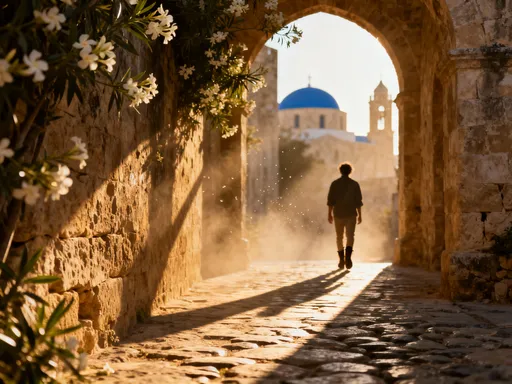
Wandering into the heart of Byblos’s old town is like tracing the pages of a centuries-old manuscript, each turn revealing a new chapter. The streets are narrow, winding, and uneven—paved with worn flagstones that glisten after rain. They follow no grid, no logic, but instead flow like veins through the town’s living body. This maze was not designed for tourists; it evolved over millennia, shaped by the needs of fishermen, merchants, and families who built their lives into the very bones of the city.
Every wall tells a story of conquest, adaptation, and survival. Beneath the surface of many buildings, Phoenician masonry can still be seen—massive limestone blocks fitted together without mortar, a testament to engineering that has endured for over three thousand years. These foundations support structures from later eras: Roman columns repurposed as door frames, Byzantine arches incorporated into shop fronts, Islamic-era windows with delicate stucco patterns. The architecture here is not a timeline neatly arranged in sequence but a collage—fragments of different civilizations stacked like sediment, each layer adding depth and character.
One does not merely observe this history—they live within it. A bakery operates from a vaulted chamber that may have once stored olive oil for Phoenician traders. A tailor works behind a counter framed by a Roman lintel. These are not theatrical recreations; they are the natural evolution of a place where the past is not archived but actively reused. The weathered doorways, the chipped carvings, the mismatched stones patched together over time—all speak of resilience. There is no pretense of perfection. Instead, there is dignity in the visible repairs, the scars of time worn proudly.
For visitors, this creates a powerful sense of connection. You are not an outsider looking in; you are walking through a community that has learned to live with its history, not apart from it. The absence of museum ropes or guided zones makes the experience intimate. Children play near ancient cisterns; cats nap on sun-warmed steps that once led to a temple. This is heritage as a lived experience, not a performance. And in that authenticity lies its greatest beauty.
Byblos Citadel: Where Crusaders Left Their Stamp
Dominating the skyline of Byblos, the Crusader Citadel stands as a silent guardian overlooking the sea. Built in the 12th century by the Crusaders who recognized its strategic value, the fortress was constructed atop even older fortifications, layering medieval military architecture onto a foundation that dates back to the Bronze Age. Its massive stone walls, some over three meters thick, enclose a complex of towers, ramparts, and underground chambers. Walking through its arched gateways, one feels the weight of centuries—the crunch of gravel underfoot, the echo of footsteps in vaulted corridors, the coolness of shaded stone against the skin.
The citadel’s design reflects its purpose: defense, surveillance, and control. The towers rise at key corners, offering panoramic views of the coastline and surrounding hills. From these heights, sentries could spot approaching ships long before they reached the harbor. The battlements are still intact in places, their crenellations casting jagged shadows in the afternoon light. Inside, the space is open yet contained—a courtyard surrounded by remnants of barracks, stables, and storage rooms. Though much of the interior has been cleared for visitor access, the sense of military order remains palpable.
What makes the citadel especially compelling is its state of careful preservation. Unlike fully reconstructed fortresses elsewhere, Byblos’s citadel has not been smoothed into historical fantasy. Cracks run through the walls, ivy creeps through crevices, and some sections are roped off not for show but for safety. This honesty about decay adds to its authenticity. Visitors are encouraged to touch the stones, to run their hands over the rough-hewn surfaces, to imagine the hands that placed them centuries ago. Interpretive signs—minimal and unobtrusive—offer context without overwhelming the experience.
Today, the citadel serves not only as a historical site but as a cultural venue. During summer months, it hosts open-air concerts and traditional music performances, its stone walls amplifying the sound of ouds and darbukas under the stars. This adaptive reuse respects the past while allowing the space to remain relevant. Families gather on the grassy slopes outside, children climb on safe sections of the outer walls, and photographers capture the golden hour glow on ancient stone. The citadel is not a relic frozen in time—it is a living monument, still shaping the life of the town.
Ottoman-Era Houses: Color, Courtyards, and Craftsmanship
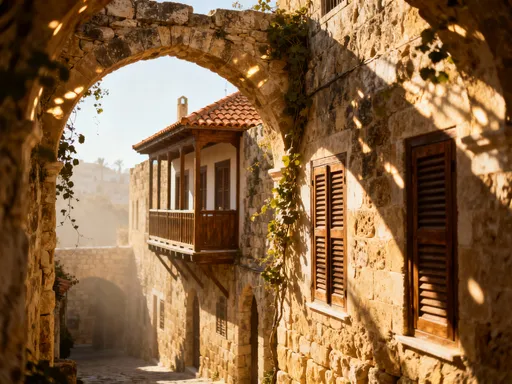
While the citadel speaks of power and defense, the Ottoman-era houses of Byblos reveal a quieter, more intimate side of the town’s architectural soul. Scattered throughout the old quarter, these homes date primarily from the 18th and 19th centuries, when Byblos was part of the Ottoman Empire. They are modest in scale but rich in detail—wooden balconies jut over narrow streets, their latticework casting delicate shadows on whitewashed walls. Red-tiled roofs slope gently under the sun, and arched windows framed in dark wood offer glimpses into shaded interiors.
The true heart of these houses lies within: the inner courtyards. Enclosed by high walls for privacy and protection from the summer heat, these open-air spaces are often filled with potted plants, citrus trees, and climbing jasmine. A stone fountain might trickle softly in one corner, its sound mingling with the chirp of birds. These courtyards were designed for family life—spaces for meals, conversation, and quiet reflection. The architecture reflects a blend of Levantine practicality and Mediterranean elegance, where light, air, and nature are integral to daily living.
Doors are another signature feature. Many are hand-carved from solid wood, with geometric patterns or floral motifs that hint at the craftsmanship of a bygone era. Some are painted in deep blues or greens, colors believed to ward off evil spirits—a tradition that persists today. Inside, ceilings may be adorned with painted beams, and floors laid with patterned tiles brought from other parts of the empire. These homes were not built for grandeur but for comfort, beauty, and a deep connection to place.
Preserving these houses presents ongoing challenges. Salt air, humidity, and occasional seismic activity take their toll. Some homes have been abandoned, their wooden elements rotting, their tiles cracked. Yet there is a growing movement to restore them with care. Local families, often descendants of the original owners, are investing in repairs using traditional materials and techniques. Others have been transformed into boutique guesthouses, cultural centers, or artisan workshops—spaces that honor the past while serving modern needs. These efforts ensure that the soul of Ottoman Byblos continues to live, not as a museum piece but as a home.
Religious Architecture: Coexistence in Stone and Design
One of the most profound aspects of Byblos’s urban landscape is the quiet proximity of its religious sites. Within a few hundred meters, visitors can stand before the ruins of a pagan temple, step into the remains of a Crusader cathedral, and hear the call to prayer from a mosque’s slender minaret. These structures do not compete for dominance; they exist in a kind of silent dialogue, each contributing to the town’s spiritual and architectural tapestry.
The Crusader Cathedral, dedicated to St. John the Baptist, is one of the most visible. Its tall, arched windows and remnants of Gothic vaulting speak of European influence, yet the stone used in its construction is local, quarried from the same hills that supplied the Phoenicians. Though no longer used for regular worship, the cathedral remains a place of reverence. Light filters through broken stained glass, illuminating patches of mosaic floor. Nearby, the Mohammad Al-Amin Mosque rises with a more recent minaret, its dome and calligraphy blending Ottoman and modern Islamic design. The contrast is striking—pointed arches beside rounded domes, bell towers beside slender spires—yet the overall effect is one of harmony, not conflict.
Even older traces remain. Foundations of a temple to the Phoenician goddess Baalat Gebal, dating back to 2800 BCE, lie just steps from the cathedral. Once the spiritual center of the city, this sacred site was later incorporated into Roman and Byzantine religious complexes, showing how successive cultures repurposed holy ground rather than erasing it. This layering is not unique to Byblos, but here it feels especially organic—less a result of conquest and more a testament to continuity.
What stands out is the absence of tension in this religious overlap. There are no barricades, no signs of division. Instead, there is a quiet acceptance, a recognition that faith, like architecture, evolves. Locals move freely between spaces—Muslims walking past church ruins, Christians pausing at mosque gates, tourists photographing inscriptions in multiple scripts. The urban design reflects this coexistence: pathways connect sites naturally, not through forced integration but through centuries of shared use. In a world often divided by religion, Byblos offers a subtle but powerful lesson—unity does not require uniformity. It can grow from mutual respect, quiet presence, and the simple act of sharing space.
Modern Touches in an Ancient Framework
Byblos does not resist modernity—it weaves it into its ancient fabric with care and intention. Today’s visitors will find art galleries housed in 19th-century stone buildings, their white walls displaying contemporary paintings beside original fireplaces. Cafés operate from vaulted cellars, their patrons sipping mint tea beneath ceilings supported by Phoenician columns. Even signage is thoughtfully designed—wooden plaques with hand-painted lettering, discreet metal frames that avoid visual clutter. These modern elements do not dominate; they complement, enhancing the town’s charm without compromising its character.
Local authorities and community leaders have implemented strict guidelines for new construction and renovations. Buildings must adhere to height restrictions, use traditional materials like limestone and wood, and maintain architectural features such as arched windows and sloped roofs. These rules are not enforced rigidly but applied with sensitivity, allowing for creativity within boundaries. The result is a town that feels both timeless and alive—a place where innovation respects heritage rather than erasing it.
Tourism plays a significant role in this balance. Byblos welcomes visitors, but not at the cost of authenticity. There are no souvenir megastores or neon-lit arcades. Instead, small family-run shops sell handmade jewelry, olive oil soaps, and embroidered linens—goods rooted in local tradition. Restaurants focus on regional cuisine: grilled fish, tabbouleh, stuffed grape leaves, all prepared with ingredients sourced from nearby farms and markets. Even the way people interact feels genuine—hospitality is warm but not performative, personal but not intrusive.
This thoughtful integration ensures that Byblos remains a place where locals live, not just a backdrop for photographs. Children still play in the alleys, fishermen mend their nets by the harbor, and elders gather in shaded squares. Modern life—electricity, internet, medical services—is present but discreet. The town’s identity is not for sale; it is shared. And in that distinction lies its true value.
Why Byblos Matters: A Model of Timeless Urban Design
Byblos is more than a beautiful destination—it is a lesson in how cities can grow without losing their soul. In an age when urban development often means demolition and homogenization, Byblos demonstrates that progress and preservation are not opposites. Its architecture tells a story not of perfection, but of continuity—of walls patched with different stones, of homes adapted across generations, of faiths overlapping without erasure. This is sustainable heritage: not frozen in time, but evolving with dignity.
What travelers can learn from Byblos is the value of authenticity. The town’s beauty does not come from flawless restoration or curated aesthetics. It comes from the cracks, the weathering, the visible layers of repair. These imperfections are not flaws—they are evidence of life. They invite us to look closer, to touch the stone, to listen to the silence between the waves. In a world increasingly dominated by speed and uniformity, Byblos reminds us that meaning is found in slowness, in detail, in the handmade and the lived-in.
For families, for women seeking meaningful travel, for anyone who values depth over spectacle, Byblos offers something rare: a place where history is not performed but lived. It does not demand admiration; it invites connection. The walls do not just stand—they speak. And if you walk its alleys with attention, you might hear them: a whisper of the past, a murmur of the present, a quiet promise that beauty can endure, not despite time, but because of it.
So when you plan your next journey, look beyond the postcard. Seek places where time has left its mark, where every stone has a story, and where the present honors the past without pretending to restore it. Byblos is not just a destination. It is a dialogue—one that continues with every footstep on its ancient paths.