You Won’t Believe How Bologna’s Public Spaces Stole My Heart
Walking through Bologna, I didn’t just see a city—I felt it. Its porticoed streets, lively piazzas, and hidden courtyards aren’t just spaces; they’re living rooms for locals, stages for daily life. Unlike crowded tourist hubs, Bologna’s public spaces invite you in, slow you down, and make you part of the rhythm. This is urban life at its most authentic—warm, layered, and full of quiet magic. There’s no need to rush, no pressure to perform. You simply exist, and in doing so, you begin to understand how a city can be more than a collection of buildings. It can be a shared experience, a collective breath, a place where every corner tells a story of connection.
The Soul of the City: Why Public Spaces Define Bologna
Bologna is not a city designed for speed. From the moment you step into its historic center, the pace shifts. The rhythm slows, the air feels different—warmer, somehow, even in winter. This is no accident. Bologna’s identity has been shaped over centuries by a deep cultural commitment to public life. Unlike other Italian cities that prioritize grand monuments or sweeping vistas, Bologna builds its soul into the spaces between buildings. Here, urban design is not about spectacle but about belonging. The city’s public spaces—its arcaded streets, open squares, and tucked-away courtyards—are not afterthoughts; they are the foundation of daily existence.
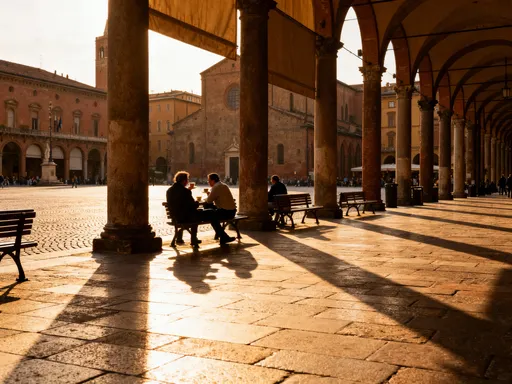
The philosophy behind this is simple but profound: spazio pubblico is not just a physical location but a social contract. It belongs to everyone and is shaped by everyone. This concept is so central to Bologna’s identity that its porticoes were inscribed on UNESCO’s World Heritage list in 2021, not merely for their architectural beauty but for their role in fostering community. These covered walkways stretch for more than 12 miles across the city, forming a continuous network that protects pedestrians from sun and rain while encouraging lingering, conversation, and chance encounters.
Imagine walking beneath centuries-old arches as morning light filters through stone columns, casting long shadows on cobblestones worn smooth by generations of footsteps. The air carries the scent of fresh bread from a nearby bakery and the faint hum of espresso machines warming up behind counters tucked into the porticoes. A woman in a floral apron arranges baskets of cherries outside her fruit stand. Two students sit on a low wall, sharing a pastry and debating their lecture. These moments are not staged for visitors; they are the ordinary poetry of Bolognese life. In a world where cities often feel alienating or transactional, Bologna offers a different model—one where space is shared, time is honored, and human connection is built into the streets themselves.
Piazza Maggiore: The Beating Heart of Communal Life
If Bologna has a civic heart, it is Piazza Maggiore. This vast, open square has been the city’s central gathering place for over 800 years, and it still pulses with energy every single day. Unlike the polished, postcard-perfect piazzas of other Italian cities, Piazza Maggiore feels alive in the most unpretentious way. It is not preserved behind glass; it is used, loved, and lived in. In the early morning, the square is quiet, with only a few joggers and delivery trucks breaking the stillness. But by mid-morning, it fills with life—locals stopping to chat, tourists consulting maps, and pigeons darting between benches.
By afternoon, the rhythm intensifies. Students from the nearby university spread out across the steps of the Basilica di San Petronio, their textbooks open but attention often drifting to the scene around them. Elderly men gather in small clusters, gesturing animatedly as they discuss everything from football to national politics. Street performers set up near the fountain, drawing small crowds with music or magic tricks. In the evenings, especially during summer, the square transforms into an open-air theater. Temporary stages host concerts, film screenings, and cultural festivals, drawing thousands of residents who bring folding chairs or simply sit on the warm stone.
What makes Piazza Maggiore so powerful is not just its size or beauty but its adaptability. It serves as a marketplace, a protest site, a celebration ground, and a place of quiet reflection—all within the same week. The surrounding buildings, including the imposing Palazzo d’Accursio and the unfinished Gothic façade of San Petronio, do not stand as distant monuments. They are active participants in public life. The palazzo houses the city’s administration, making governance visible and accessible. The basilica, dedicated to Bologna’s patron saint, hosts religious ceremonies but also community events, reinforcing the idea that sacred and civic life are intertwined.
Even during quieter moments, the square feels charged with history and possibility. Standing in its center, you can almost hear the echoes of medieval councils, Renaissance debates, and modern-day demonstrations. Piazza Maggiore is not frozen in time; it evolves with the city, yet always remains a place where people come together—not as spectators, but as participants in something larger than themselves.
Porticoes: More Than Just Covered Walkways
Bologna’s porticoes are its most iconic feature, yet their true significance goes far beyond aesthetics. While other cities might boast grand boulevards or monumental plazas, Bologna’s genius lies in these covered walkways that line over 12 miles of streets. They are not merely architectural flourishes; they are essential social infrastructure. Designed to protect pedestrians from the region’s frequent rain and intense summer sun, the porticoes also create a continuous, sheltered public realm where life can unfold at a human pace.
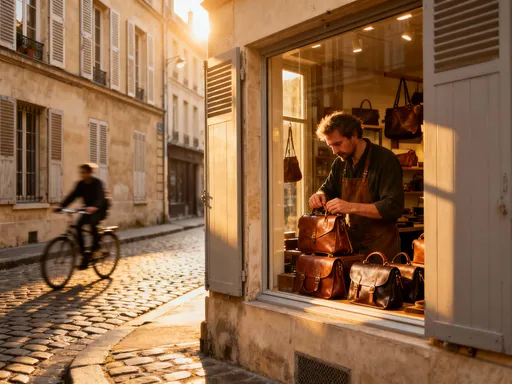
From the outside, they may appear uniform—rows of arches supporting upper floors of historic buildings. But each one has its own character. Some are tall and airy, with vaulted ceilings that amplify the sound of footsteps and conversation. Others are narrow and intimate, feeling more like tunnels than walkways. Many have been adapted over time, with shops, cafes, and even small galleries built into their depths. A barista might wave from behind a marble counter tucked beneath a centuries-old arch, serving cappuccinos to regulars who stop by every morning. An artisan might display handmade leather goods on a folding table, chatting with passersby about the craft of vegetable-tanned leather.
What makes the porticoes truly special is how they encourage lingering. In cities where sidewalks are narrow and fast-moving, Bologna’s arcades create space for pause. You can walk slowly, browse a bookstall, wait for a friend, or simply stand and watch the world go by—all without stepping into traffic or feeling exposed to the elements. Street musicians often perform in the deeper arches, where the acoustics are rich and resonant. A violinist’s melody might echo under a vaulted passage, drawing listeners to stop and close their eyes for a moment.
The porticoes also blur the line between public and private. While they are legally public spaces, they feel personal, almost domestic. In some neighborhoods, residents place potted plants or small benches just inside the arches, turning them into semi-private extensions of their homes. Children play under the arches after school. Neighbors greet each other by name. These interactions are not grand events; they are the quiet, daily rituals that build trust and belonging. In a world increasingly dominated by digital connection, Bologna’s porticoes offer a rare physical space where community is not just possible but inevitable.
Hidden Courtyards and Secret Passages: Discovering Intimate Public Spaces
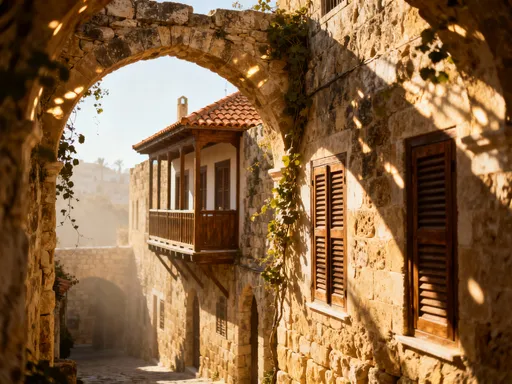
Beyond the main piazzas and bustling porticoes, Bologna reveals another layer of public life—one that feels almost secret. Tucked behind heavy wooden doors, accessible through narrow alleyways, or hidden within historic palazzi, the city’s internal courtyards are some of its most enchanting spaces. These are not tourist attractions with entrance fees or opening hours. They are lived-in, often maintained by the residents of the buildings that surround them, yet generally open to respectful exploration.
Discovering one of these courtyards feels like finding a hidden garden in the middle of the city. Some are grand, with symmetrical staircases, fountains, and climbing ivy. Others are modest, with laundry lines strung between windows and a single bench in the corner. But all share a sense of quiet dignity. In the morning, you might see an elderly woman watering geraniums on a windowsill. In the afternoon, a delivery person might pause to catch his breath in the shade. These spaces are not designed for crowds, but they are deeply social in their own way—places where life unfolds at a domestic scale, yet remains visible and shared.
One of the most striking aspects of these courtyards is how they preserve a sense of continuity. Many date back to the Renaissance or even earlier, yet they are not museum pieces. They are still used, still evolving. A 15th-century well might now serve as a planter. A stone staircase might be worn smooth by centuries of footsteps but still lead to apartments where families raise children and host dinner parties. These spaces remind visitors that history is not something separate from daily life; it is embedded in it.
Equally fascinating are the passageways that connect different parts of the city—narrow alleys, covered corridors, and underground passages that allow pedestrians to move between piazzas without ever stepping into a street. Some of these routes are marked, but others are known only to locals. Walking through one feels like moving through the city’s veins, seeing it from a perspective few tourists ever experience. These hidden routes reinforce Bologna’s identity as a city designed for walking, for discovery, for the pleasure of getting slightly lost and then finding something beautiful.
Markets as Living Public Theaters: Mercato di Mezzo and Beyond
In Bologna, markets are not just places to buy food—they are stages for social life. The Mercato di Mezzo, located just off Piazza Maggiore, is perhaps the most famous, but it is far from the only one. These markets are vibrant, sensory-rich environments where commerce, culture, and community intersect. From early morning until late afternoon, vendors call out their daily specials, baskets overflow with seasonal produce, and the air is thick with the scent of fresh basil, ripe tomatoes, and slow-cooked ragù.
The rhythm of the market follows the rhythm of the city. In the early hours, chefs from local restaurants arrive to select the finest ingredients. By mid-morning, housewives and grandmothers—nonnas with sharp eyes and strong opinions—move from stall to stall, inspecting peaches for ripeness, sniffing prosciutto, and bargaining gently with vendors they’ve known for decades. Tourists wander through, wide-eyed, trying to pronounce “tortellini in brodo” or sampling cubes of Parmigiano Reggiano offered on toothpicks.
What makes these markets so special is that they are not sanitized or commercialized. They are noisy, crowded, and full of personality. A fishmonger might tell a joke while filleting a sea bass. A cheese vendor might insist you try a slice of squacquerone, a soft local cheese that doesn’t travel well but tastes like fresh cream and spring meadows. These interactions are not transactions; they are relationships. The market is not just a place to shop—it is a place to belong.
And the food, of course, tells the story of the region. Bologna is the capital of Emilia-Romagna, one of Italy’s most celebrated culinary regions. Here, mortadella is not just a cold cut—it is a point of pride, made with finely ground pork, peppercorns, and sometimes pistachios, following recipes passed down for generations. Balsamic vinegar from nearby Modena ages for years in wooden casks, developing a depth of flavor that mass-produced versions can’t match. Even the bread has character—piadina, a flatbread cooked on a griddle, is often filled with arugula, prosciutto, and stracchino cheese for a quick, satisfying lunch.
But more than the food itself, it is the way it is shared that matters. In the market, you see how cuisine is woven into the fabric of public life. A grandmother teaches her granddaughter how to pick the best zucchini. A young couple debates which wine to buy for dinner. These moments are small, but together they form the heartbeat of the city. The market is not just where people eat—it is where they live.
How Locals Use Public Space: A Day in the Rhythm of Bologna
To understand Bologna, you must follow the rhythm of its people. The day begins early, with the soft clatter of espresso cups in neighborhood cafes. Men in work clothes sip their morning coffee standing at the bar, exchanging quick greetings with the barista. Women walk dogs under the porticoes, their footsteps echoing in the quiet streets. By 8 a.m., the city is awake, but never rushed.
Midday brings a different energy. The sun climbs higher, and families gather in smaller piazzas for lunch. Children play near fountains while parents sit on benches, enjoying a moment of rest. University students fill outdoor tables at trattorias, sharing plates of tagliatelle al ragù and carafes of house wine. The porticoes provide shade, making even the warmest days feel comfortable. This is not a city that shuts down at noon; it slows down, savors, and reconnects.
As afternoon turns to evening, the ritual of the passeggiata begins. This centuries-old tradition—a leisurely stroll through the city—transforms public spaces once again. People of all ages dress nicely and take to the streets, not to shop or run errands, but simply to see and be seen. Friends greet each other with kisses on the cheek. Couples walk hand in hand. Teenagers gather in small groups, laughing and taking photos. The passeggiata is not just a walk; it is a social performance, a reaffirmation of community.
Then comes aperitivo hour, one of Bologna’s most beloved customs. As the sun dips behind the rooftops, piazzas fill with people settling in for drinks and conversation. Bars set out tables and chairs, and the air fills with the clink of glasses and the murmur of overlapping voices. Aperitivo is more than a drink—it is an invitation to linger. Many bars offer a buffet of small bites—crostini, olives, mini quiches—encouraging guests to stay longer. In this way, the square becomes an open-air lounge, a shared living room under the stars.
By nightfall, the city does not close in on itself. Even late, you’ll find people sitting on stone steps, sharing wine from a bottle, or walking home slowly, reluctant to end the day. Public space in Bologna is not reserved for daylight hours; it belongs to the people at all times, shaping their routines, their relationships, and their sense of self.
Why This Matters: The Bologna Model for the Future of Cities
Bologna’s approach to public space offers more than charm—it offers a vision. In an era of urban isolation, car-dominated streets, and increasingly privatized environments, Bologna stands as a powerful counterexample. Its streets, piazzas, and porticoes are not just beautiful; they are functional, inclusive, and deeply human. They prove that well-designed public spaces can strengthen community, improve well-being, and preserve cultural identity.
Other cities can learn from this model. Too many urban centers prioritize efficiency over experience, traffic flow over foot traffic, and development over dialogue. But Bologna shows that when space is designed for people—not just movement, but connection—cities become more livable, more resilient, and more joyful. The porticoes, for instance, are not just nostalgic relics; they are climate-responsive infrastructure, providing shade and shelter in ways that reduce reliance on air conditioning or cars.
Moreover, Bologna’s emphasis on shared, accessible spaces fosters social equity. Unlike gated communities or private clubs, its piazzas and markets belong to everyone. A student, a retiree, a tourist, and a shopkeeper can all occupy the same square without hierarchy. This democratization of space encourages empathy, reduces loneliness, and builds trust across generations and backgrounds.
As cities around the world grapple with overcrowding, pollution, and social fragmentation, Bologna’s example is not just inspiring—it is practical. It reminds us that urban life does not have to be impersonal or stressful. With thoughtful design, historical respect, and a commitment to community, cities can be places of warmth, rhythm, and belonging. Bologna is not perfect, but it is wise. And in its arcaded streets and sunlit courtyards, we can glimpse what the future of cities could—and should—be.